
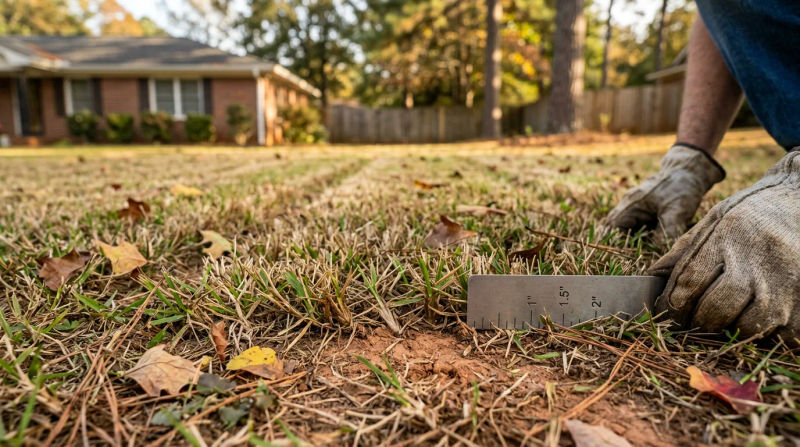
You head out on a nice October afternoon to give the lawn one last trim. The air is cooler, the grass growth has finally slowed down, and you’re looking forward to a crisp, clean-looking yard. But when you’re done, your heart sinks. Instead of a uniform green carpet, you see ugly brown and yellowish patches, almost as if the lawn has been scraped bare in spots. It looks stressed, damaged, and worse than before you started.
As a lawn care specialist with over a decade of experience here in the Sandersville area, I’ve seen this exact scenario play out many times, especially in the fall. This problem is called “lawn scalping,” and it’s one of the most common - and preventable - mowing mistakes I encounter. It happens when the mower blade cuts the grass so low that it slices into the stems or crowns of the grass plants, or even scrapes the soil itself. Let’s walk through how to identify it, what causes it, and what you can do to fix it.
Common Signs and Symptoms
Recognizing the immediate aftermath of a scalping incident is usually straightforward. The damage is often jarring and appears right after you mow. If you’re worried you’ve cut your grass too short, here are the key lawn scalping signs to look for:
- Brown or Yellow Patches: This is the most obvious sign. Instead of green blades, you see the brownish, woody stems of the grass plants. In severe cases, you might even see bare dirt.
- Noticeable Brown Streaks After Mowing in Tennille: If the scalping is caused by one low wheel or an uneven mower deck, you’ll often see distinct lines or streaks of damage that follow your mowing pattern. The lawn will look striped, but with brown stripes instead of light and dark green ones.
- A Thin, Stubbly Appearance: Healthy grass blades have some width and flexibility. Scalped grass looks like a buzz cut gone wrong - just stiff, brown stalks sticking up.
- Visible Crown of the Plant: The crown is the whitish base of the grass plant, right at the soil level, where new growth originates. If you can see the crowns, you’ve definitely cut way too low. Damaging the crown can seriously injure or even kill the plant.
- Increased Weed Growth: Scalping a lawn is like rolling out the welcome mat for weeds. The thin, damaged turf can’t compete, and opportunistic weeds like crabgrass and poa annua will quickly move into the bare spots.
- Dust Clouds While Mowing: If you see puffs of dirt kicking up from your mower deck, it’s a sure sign your blades are hitting the ground.
What Causes This Problem
Understanding why scalping happens is the first step toward preventing it. It’s rarely intentional; it’s usually a combination of equipment settings and yard conditions, especially during seasonal transitions in October.
One of the biggest culprits is simply setting the Tennille mowing height too low. During the summer, our warm-season grasses like Bermuda and Zoysia are growing vigorously and can tolerate a shorter cut. But as temperatures cool in the fall, their growth slows dramatically. The height that worked in July is now too aggressive for semi-dormant turf. A good rule of thumb is to never remove more than one-third of the grass blade in a single mowing. If your grass is 3 inches tall, you shouldn’t cut it shorter than 2 inches.
Uneven terrain is another major factor, and it’s something I see a lot in Tennille. Many of the beautiful, established properties with single-story Ranch homes from the 1950s and 60s have had decades to settle. Over time, lawns develop lumps, bumps, and subtle dips. When a mower wheel drops into a low spot, the opposite side of the deck tilts down and gouges the turf. Tree roots near the surface can also create high spots that get scalped every time.
Dull mower blades contribute to the problem, too. Sharp blades give a clean, surgical cut. Dull blades rip and tear the grass, which stresses the plant and makes it look frayed and brown, exaggerating the appearance of a scalped area.
Finally, a thick layer of thatch - the spongy layer of dead and living organic matter between the grass blades and the soil - can cause scalping. The mower's wheels ride on top of this bouncy layer, and when they hit a compressed area, the blade can dip down and scalp the turf.
How to Fix a Scalped Lawn Tennille
So, you’ve scalped the lawn. Don’t panic! In most cases, the grass will recover if you take the right steps. Here’s how to fix a scalped lawn in Tennille and get it back on track.
First, resist the urge to overcompensate with a ton of fertilizer or water. Stressed grass can't handle it. Instead, give the affected areas a gentle, deep watering to help rehydrate the plant and soil. Rake up any clumps of dead, shredded grass to allow for better airflow and sunlight to reach the soil.
The most important next step is prevention. Immediately raise your mower's cutting height. For Bermuda grass in the fall, a height of 1.5 to 2 inches is much safer. For Zoysia, aim for 2 to 2.5 inches. This gives the grass plenty of leaf surface to perform photosynthesis and recover.
Next, check your mower blades. If you can't remember the last time you sharpened them, it's been too long. Aim to sharpen them at least twice a year - once in the spring and again in mid-summer.
For long-term recovery, you may need to address the underlying terrain issues. If you have a few specific low spots that always get scalped, you can level them by topdressing. This involves filling the depression with a mix of sand and topsoil and gently raking it smooth. The surrounding grass will grow through it over time.
If the scalping is widespread and you have a very bumpy lawn, a more intensive core aeration and topdressing project might be needed. This is often best left to experienced professionals who have the right equipment to do it efficiently.
When to Call a Professional
While minor scalping can be managed with DIY adjustments, there are times when it’s wise to bring in an expert.
- Widespread Damage: If more than 30-40% of your lawn is scalped, the recovery process can be complex. A professional can assess the overall health of the turf and create a comprehensive recovery plan that might include specialized fertilization, aeration, or overseeding.
- Recurring Issues: If you've raised your mower height and sharpened your blades but scalping continues to be a problem, there’s likely an underlying issue with soil compaction or severe terrain unevenness. An experienced lawn care team can diagnose the root cause.
- You Lack the Time or Equipment: Correcting a severely bumpy lawn or performing a proper core aeration requires specific knowledge and machinery. A qualified professional can get the job done correctly and safely, saving you time and potential frustration.
- Compounded Problems: If you notice signs of disease or pest infestations in the scalped areas, it’s best to get a professional diagnosis. Treating the wrong problem can make things worse.
My team and I believe that a healthy lawn starts with smart, fundamental practices. Mowing is the most frequent thing we do to our lawns, so getting it right is critical.
Conclusion
Lawn scalping is a frustrating but fixable problem. It's a clear signal that your turf is under stress, most often from a mowing height that’s too low for the season or the terrain. By recognizing the signs, understanding the causes, and adjusting your mowing habits - especially raising that blade height in the fall - you can help your lawn recover and prevent future damage. Remember that the established lawns around Tennille have unique needs, and what works in summer may not work in autumn.
Don't wait for a small brown patch to become a large weedy area. Addressing the issue early will ensure your lawn stays healthy and resilient as it heads into winter dormancy.
If you notice any of these signs and are unsure how to proceed, contact a local lawn care professional for an inspection.