
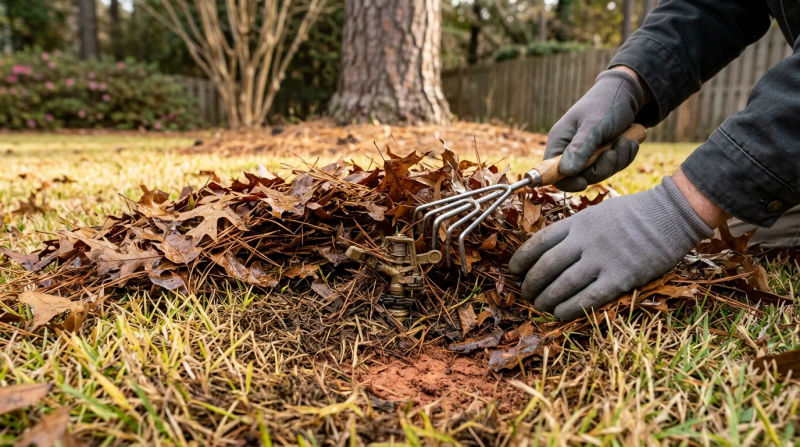
As an experienced lawn care technician, I've seen a common pattern play out every October in Evans. The brutal summer heat finally breaks, and for a moment, everything seems perfect. But then you start to notice it: a yellowing carpet of pine needles under the big pines, a scattering of acorns from the oak trees, and the first wave of leaves drifting down. It might just look like the normal change of seasons, but I’ve learned that what seems like a small layer of debris can quickly become a big problem for your turf, especially for the warm-season grasses we have here in Georgia.
That seemingly harmless blanket of fall debris can quietly smother your lawn, trapping moisture and blocking the sunlight your grass needs to store energy for the winter. Before you know it, you’re dealing with thinning turf and mysterious dead spots come spring. The key is to recognize the early warning signs and act before the damage is done.
Common Signs and Symptoms
Recognizing the subtle cries for help from your lawn is the first step. Based on my 12 years of experience, these are the most common indicators that your yard is overdue for a thorough fall clean-out. Here are the top seven signs you need leaf removal in Evans GA before winter arrives.
- You Can’t See Your Grass: This may sound obvious, but it’s the most critical sign. If leaves, pine needles, and twigs have formed a solid mat over your turf, your grass is being starved of essential sunlight and air circulation.
- A Spongy or Wet Lawn: If your yard feels squishy underfoot long after a rain, it’s a red flag. A thick layer of debris acts like a sponge, holding moisture against the soil. This creates an ideal environment for fungal diseases like brown patch and dollar spot, which can devastate a lawn as it prepares for dormancy.
- Thinning Turf and Bare Patches: Have you noticed areas that were thick and green in the summer are now looking a little sparse? This is often a direct result of debris smothering the grass beneath. Fall debris causing bare spots in lawn is a frequent issue I see when clean-ups are delayed.
- Mushroom Growth: While some mushrooms are harmless, a sudden explosion of them across your lawn is a clear sign of excess moisture and decaying organic material. That layer of wet leaves is the perfect breeding ground for fungi.
- Gutter and Drainage Issues: Take a look at where your downspouts empty. If you see piles of leaves and pine straw accumulating, it means your clean-out is overdue. This can block proper drainage, leading to water pooling near your home’s foundation - a much bigger problem than just an unhealthy lawn.
- Increased Pest Activity: A thick blanket of leaves provides the perfect winter shelter for insects, mice, and other pests. If you’re noticing more critters than usual, they may be taking up residence in the cozy debris layer covering your yard.
- The Infamous Pine Straw Mat: Here in the Evans area, this is a major one. The long needles from our pine trees weave together to form a dense, almost impenetrable mat. This is a classic case of pine straw buildup killing grass Evans homeowners contend with every year. It acidifies the soil and physically blocks any chance for the grass to breathe or see the sun.
What Causes This Problem
The root cause is simple: an excessive accumulation of organic debris. In autumn, our beautiful, mature trees - often a key feature of the spacious properties in Evans, especially in neighborhoods with homes built in the 1990s and 2000s - begin shedding leaves, needles, and acorns at a rapid pace. While a light dusting can be beneficial, the sheer volume becomes the problem.
This layer of debris does several damaging things:
- It Smothers the Turf: Grass, even as it heads into dormancy, needs access to sunlight to photosynthesize and store energy for spring green-up. It also needs air circulation to stay dry and healthy. A thick leaf mat cuts off both, effectively suffocating the turf.
- It Traps Moisture: As I mentioned, the debris layer holds water against the grass blades and soil. This stagnant, damp environment is a breeding ground for lawn diseases that can weaken or kill your grass over the winter.
- It Blocks Nutrients: Any late-season fertilizer or nutrients you apply won’t be able to reach the soil if they’re blocked by a thick layer of matted leaves. The same goes for water and air, which are critical for healthy root systems.
- It Can Alter Soil pH: A heavy layer of certain types of debris, particularly pine straw, can gradually make the soil more acidic. Most turfgrasses prefer a neutral pH, so this change can inhibit nutrient uptake and stunt growth over time.
For many homeowners in this area, the curb appeal of their large, neo-traditional homes is a point of pride. Letting a thick layer of debris sit on a spacious front lawn all winter undermines that effort and, more importantly, jeopardizes the health of the very turf that makes that curb appeal possible.
When to Call a Professional
Deciding whether to tackle a fall yard clean-out yourself or hire help comes down to a few key factors: the size of your property, the amount of debris, and your available time and equipment.
Consider a DIY Approach If:
- You have a smaller yard with only a few young trees.
- The leaf fall is light and can be managed with a mulching mower (which shreds the leaves into fine particles that can benefit the soil).
- You have the right tools - a good rake, leaf blower, and plenty of yard waste bags - and the physical ability and time to do the job right.
It’s Time to Call a Professional When:
- You live on a larger property, like the spacious lots common in Evans, with numerous mature hardwood and pine trees. The volume of debris can be overwhelming.
- You’re dealing with a heavy layer of wet, matted leaves or a dense blanket of pine straw. This is tough, back-breaking work that standard residential equipment often can't handle effectively.
- You simply don’t have the time. A thorough clean-up can take an entire weekend or more for one person. My team and I can often complete the same job in a matter of hours with our professional-grade equipment.
- You want the job done comprehensively. An experienced professional won't just remove the leaves. They will clear out landscape beds, patios, and walkways, and ensure all debris is properly removed from the property. They have high-powered blowers and vacuum systems that can handle a massive volume of debris efficiently, ensuring a truly clean slate for your lawn before winter.
Conclusion
As the temperatures cool and the leaves fall, it’s easy to think that lawn care season is over. But from my experience, a fall yard clean-out is one of the most important services you can perform to ensure a healthy, vibrant lawn next spring. That layer of leaves and pine straw isn't just an eyesore; it's a direct threat to the health of your turf.
By watching for the common signs - a spongy feel, thinning patches, or a lawn you can no longer see - you can intervene before serious damage occurs. Don't wait until the debris is a soggy, frozen mat in January. A proactive approach in the fall sets the stage for success and saves you from costly and frustrating repair work later on.
If you notice any of these signs, contact a local lawn care professional for an inspection. They can assess the situation and help you prepare your yard for a healthy winter dormancy.