
Hi, I’m Caleb Whitaker, a turf specialist with over a dozen years of experience working with Georgia lawns. When a homeowner in Macon-Bibb County calls me about a piece of property they want to reclaim, one of the first questions they always ask is, “What’s this going to cost?” It’s a perfectly reasonable question, and one that doesn’t always have a simple answer. The truth is, the cost to clear land can vary significantly.
My goal here isn’t to sell you anything, but to give you a transparent, honest look at what goes into pricing a land clearing job. I believe an informed customer is a happy customer. So, let’s break down the real costs of transforming an overgrown lot into a usable space, from typical price ranges to the specific factors my team and I look at when creating an estimate.
Average Costs in Macon-Bibb County
First, let’s talk numbers. While every project is unique, we can establish some general price ranges to help you budget. The lot clearing cost per acre Georgia contractors quote will depend heavily on what’s actually on that acre. Here in the Macon area, I generally see projects fall into a few categories.
- Light Brush Clearing: This involves clearing tall grass, weeds, briars, and small saplings (typically under 3 inches in diameter). For this type of work, brush clearing prices Macon-Bibb County can range from $500 to $1,500 per acre. This is for lots that are mostly overgrown with vegetation that can be handled by heavy-duty mowers or a forestry mulcher without much difficulty.
- Medium or Mixed Clearing: This is the most common scenario I encounter. These lots have a mix of thick brush, vines, and numerous small-to-medium-sized trees (3 to 8 inches in diameter). The cost for this level of clearing typically falls between $1,500 and $4,000 per acre. The wider range accounts for the density of the trees and the type of wood.
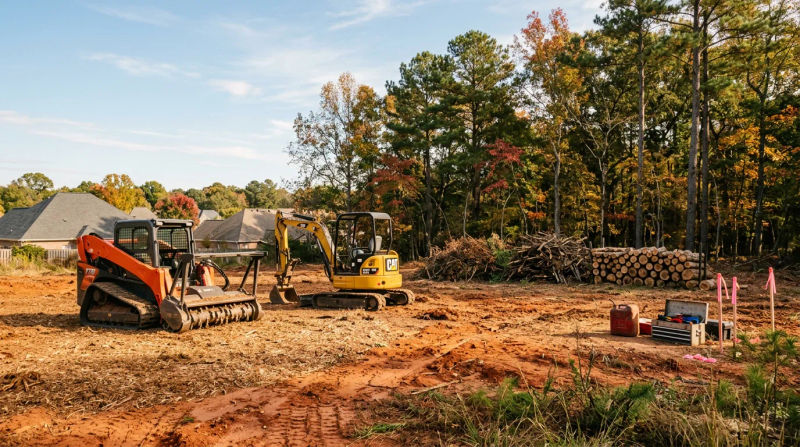
- Heavy or Dense Clearing: This is for properties with many mature trees (over 8 inches in diameter), large stumps, and dense, established forest. This is the most intensive work, requiring heavy machinery like excavators and bulldozers. The land clearing cost for this can be $4,000 to $8,000 per acre, or even higher, especially if extensive stump removal and debris hauling are required.
For smaller residential lots, like the quarter-acre or half-acre properties common in our area, contractors often quote a flat project fee rather than a per-acre rate. An overgrown lot clearing estimate for a standard suburban backyard might range from $800 to $3,000, depending on the factors we’ll discuss next.
Factors That Affect Price
The price ranges above are just a starting point. The final quote you receive will be based on a detailed assessment of your specific property. Here are the key variables my team and I always evaluate.
- Density and Type of Vegetation: A field of tall weeds is much faster and cheaper to clear than a dense thicket of privet, sweetgum, and tangled vines. Hardwood trees take more time and heavier equipment than softwoods like pine. The more trees per acre and the larger their diameter, the higher the cost.
- Accessibility: Can we get our equipment to the work area easily? Narrow gates, nearby structures, septic tank locations, or steep drop-offs can limit access. If we have to use smaller, less efficient equipment or do more work by hand, labor costs will increase. Many of Macon's beautiful 1950s-era neighborhoods feature homes on generous lots, but access might be restricted by established landscaping or fences that weren't designed for modern machinery.
- Terrain and Topography: A flat, dry lot is the ideal scenario. Working on steep slopes is slower, more dangerous, and requires specialized equipment, all of which adds to the cost. The clay soil common in Georgia can also be a factor; when it’s wet, it can lead to deep ruts and cause equipment to get stuck. This is why working during drier periods, like we often see in October, can sometimes be more efficient and cost-effective.
- Stump Removal: Clearing the brush and trees is one thing; dealing with the stumps is another. Leaving stumps in the ground is the cheapest option. Grinding them down to below ground level costs more but allows you to plant grass over the area. Complete stump extraction with a backhoe is the most expensive option but is necessary if you plan to build a foundation or install a driveway.
- Debris Disposal: This is a major cost driver. What happens to all the cleared material?
- Forestry Mulching: This method uses a machine to shred trees and brush right where they stand, turning them into a layer of mulch. It’s often the most cost-effective and eco-friendly option as it avoids hauling fees and enriches the soil.
- Piling and Burning: This can be a lower-cost option, but it depends on local regulations and burn bans. It also leaves you with a burn scar on the property.
- Hauling Away: Loading all the debris into dump trucks and taking it to a landfill or processing facility is the most expensive option due to labor, trucking, and disposal fees.
How to Get the Best Value
Getting your land cleared is a big investment, but there are ways to manage the cost without sacrificing quality.
- Define Your Goals Clearly: Before you even call a contractor, walk the property. Are there specific trees you want to save? Mark them clearly with brightly colored ribbon. Do you need the entire lot cleared, or just a portion? The more specific you are, the more accurate your estimate will be.
- Get Multiple, Itemized Quotes: Don’t just go with the first price you hear. I always recommend getting at least three written estimates from reputable, insured contractors. Make sure the quotes are “apples to apples” - they should clearly itemize what’s included, such as stump grinding, debris hauling, and final grading.
- Be Flexible with Timing: If your project isn't urgent, ask if there’s a less busy time of year to schedule the work. As mentioned, drier seasons can make the job go more smoothly and prevent extra costs associated with muddy conditions.
- Discuss Debris Options: Ask contractors about the pros and cons of forestry mulching versus hauling. If you don’t need a perfectly clean slate for construction, mulching can save you a significant amount of money.
Questions to Ask Your Contractor
To ensure you’re hiring a true professional, here are a few essential questions to ask before you sign a contract:
- Are you licensed and fully insured (both liability and workers' compensation)? This is non-negotiable. It protects you from any liability if an accident happens on your property.
- Can you provide an itemized quote? A professional will have no problem breaking down the costs for labor, equipment, and disposal.
- What equipment will you use, and how will you protect the rest of my property? Understand their plan to minimize damage to your driveway, lawn, or any trees you want to keep.
- How will the debris be handled? Make sure their plan for disposal is explicitly stated in the contract.
- What is the estimated timeline for completion?
- Can you provide references from recent, similar jobs in the Macon-Bibb County area?
Clearing an overgrown lot is the first step toward unlocking your property's potential, whether you're planning a new garden, building a home, or simply want to enjoy your space. While the land clearing cost can seem daunting, understanding the factors involved empowers you to make a smart, confident decision.
For a personalized, on-site estimate in the Macon-Bibb County area, feel free to contact my team at Eric’s Lawn Care. We’re always happy to walk your property with you and provide a free, no-obligation consultation.