
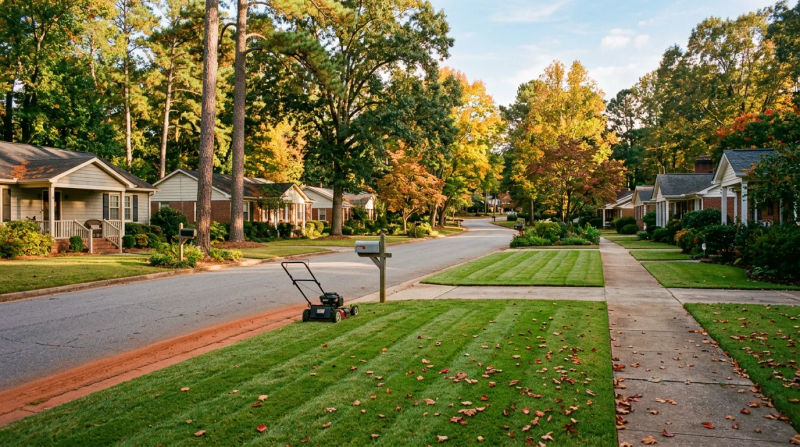
As a lawn care specialist who's spent more than a decade working on lawns right here around Harrison and Sandersville, I can tell you that October has a feel all its own. The air gets a little crisper, the intense summer heat finally breaks, and we all start thinking about fall. For homeowners, one of the biggest questions I get this time of year is, "Caleb, can I finally stop mowing every single week?" The short answer is yes, probably. But the right answer for your specific Harrison lawn is a bit more nuanced.
Our town has unique needs. Unlike a one-size-fits-all schedule you might find online, caring for a lawn here means paying attention to our specific weather shifts and property layouts. Many homes in Harrison, particularly the classic 1950s ranch-style houses on generous lots, have a mix of wide-open sunny areas and shady spots under mature oak and pecan trees. This creates microclimates within a single yard, and that’s where a simple calendar-based approach to mowing falls short.
Harrison Weather Challenges
October in Harrison is a transition month. We'll get beautiful, warm, sunny days that encourage a little more grass growth, followed by cool, crisp nights that signal the turf to start slowing down. This fluctuation is the primary challenge. While the overall growth rate is decreasing, it’s not a uniform shutdown. The parts of your lawn that get full sun all day might still be growing actively, while the grass under that big maple tree in the front yard has practically gone dormant.
This is why a rigid October mowing schedule can be problematic. If you switch to biweekly mowing too soon, the sunny patches can get overgrown and shaggy. When you finally cut them, you risk cutting off more than one-third of the grass blade, which stresses the plant right when it needs to be storing energy for winter. On the other hand, if you keep mowing weekly out of habit, you might be needlessly stressing the slower-growing, shaded areas, compacting the soil, and wasting your time and fuel. At Eric’s Lawn Care, we see this often in Harrison - lawns with uneven growth that need a more observant approach rather than a strict schedule.
Many of the homes here were built in the 1950s, featuring those lovely, sprawling lawns that are a hallmark of our community. These properties, with their decades-old trees, have extensive root systems that compete with the turf for water and nutrients, and their canopies create significant shade. This established landscaping is beautiful, but it's a key factor in determining the right October lawn cutting cadence Harrison GA residents should follow.
Best Practices for Local Homeowners
So, how do you know when to reduce mowing frequency Harrison lawns really need it? My team and I rely on observation, not just the calendar. Here are the best practices we follow.
- Watch the Growth, Not the Clock: The golden rule of mowing is to never remove more than one-third of the grass blade at a time. Before you mow, look at your lawn. If a weekly cut is barely trimming anything off the top, it’s a clear sign you can transition to a biweekly schedule. This is the simplest and most effective Harrison GA biweekly mowing guide you can follow.
- Raise Your Mower Blade: As we move deeper into fall, I recommend raising your cutting height by about half an inch. For Bermuda or Zoysia, this might mean moving from 2 inches to 2.5 inches. Leaving the grass a little taller allows for more surface area to absorb the diminishing sunlight, which is crucial for photosynthesis and energy storage before winter dormancy. A slightly taller cut also helps insulate the soil and protect the roots from the first frosts.
- Manage the Leaves: Those beautiful mature trees mean a lot of leaves in October. Don't let them pile up! A thick layer of leaves will smother your grass, blocking sunlight and trapping moisture, which can lead to fungal diseases. Instead of raking them all, consider mulching them with your mower. One or two passes will shred the leaves into tiny pieces that will decompose and return valuable nutrients to your soil. If the leaf cover is too heavy, it's best to bag or rake them.
- The Final Cut: Your last mow of the season, likely in late October or November, should be slightly shorter than your previous cuts. This helps prevent the grass from matting down under snow or cold winter rains, which can also encourage disease. But don't scalp it! Just bring it back down to its normal late-summer height.
The team at Eric’s Lawn Care has found that this observant, flexible approach keeps lawns healthier and tidier through the fall transition than any rigid schedule ever could.
Local Resources and References
When you're looking for lawn care advice, it’s tempting to search for general tips online. However, information written for a different climate zone won't serve your Harrison lawn well. While resources like the University of Georgia's extension office provide excellent foundational knowledge for our state's turf types, they can't account for the specific soil composition and microclimates in our immediate area.
True expertise comes from hands-on experience in the local community. It comes from knowing how the sandy spots near the creek drain differently than the clay soil on higher ground, or understanding how the shade from a particular neighborhood's tree line affects grass growth throughout the day. This is the kind of knowledge that can only be built by working in these yards, season after season.
Choosing a Local Expert
When you're choosing a lawn care partner, that local expertise is everything. A national chain might have a standardized checklist, but do they understand the specific challenges of Harrison's 1950s-era properties? Do they know how to adapt their October mowing schedule based on a forecast for a dry week versus a rainy one right here in Washington County?
As the Lead Technician for Eric’s Lawn Care, I've spent years getting to know these lawns personally. My team and I aren't just mowing grass; we're managing the health of a living part of your home's landscape. We know that a lawn isn't just a patch of green - it's where your kids play, where you host family barbecues, and it's the first thing you see when you come home. Eric’s Lawn Care has served Harrison homeowners for years, and that experience means we can spot potential issues before they become big problems and make adjustments that keep your lawn looking its best all year round.
Being an owner-operated local business means our reputation is built one lawn at a time. We're your neighbors, and we take pride in seeing a healthy, well-maintained lawn every time we drive through town.
Conclusion
Navigating the fall transition for your lawn doesn't have to be complicated. The key is to let your lawn tell you what it needs. Pay attention to its growth rate, adjust your mowing height, and manage those autumn leaves. By shifting from a calendar-based routine to an observation-based one, you’ll set your turf up for a healthy winter dormancy and a strong green-up next spring.
If you'd rather leave it to the professionals who know Harrison's lawns inside and out, my team and I are here to help. When it comes to lawn care in Harrison, Eric’s Lawn Care has the local expertise and personal commitment you can trust. Give us a call, and let's create a plan that's perfect for your yard.