
As a lawn care specialist with over a decade of experience in this part of Georgia, I’ve seen how quickly our properties can change. One minute, you have a tidy backyard, and the next, after a long, hot summer, you’re looking at a corner of your property that seems to have a mind of its own. Now that October is here and the temperatures are cooling down, many homeowners in Gibson are taking a fresh look at their yards and noticing that the fence line has disappeared behind a wall of brush or that a forgotten corner is now a dense thicket. You know it needs to be addressed before winter, but you’re left wondering: is this a simple weekend cleanup job, or do I need something more?
It’s a common question my team and I hear all the time. Understanding the difference between a property cleanup and land clearing is key to tackling the problem correctly, saving you time, money, and a lot of frustration. Let's break down what to look for.
Common Signs and Symptoms
The first step is to accurately assess what you're dealing with. Walk your property and take an honest inventory. The signs will usually point you toward one of two paths: a manageable cleanup or a more intensive clearing project.
Key brush and debris cleanup signs include:
- Surface-level debris: This is the most common issue. Think piles of fallen leaves, scattered twigs, and larger limbs that have come down during a summer storm.
- Overgrown perennial beds: Your flower beds or foundational plantings have become unruly, with weeds and overgrown plants spilling out onto the lawn.
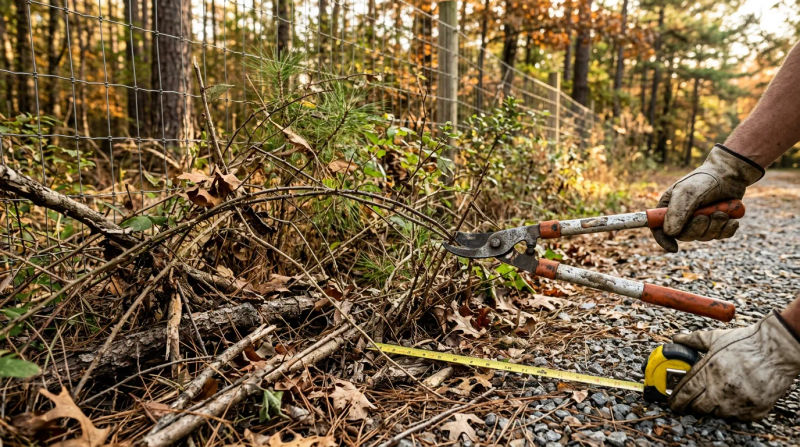
- Manageable brush: You might have some thorny vines or thick weeds growing along a fence, but they can be cut back with hand tools like loppers or a heavy-duty string trimmer.
- Cluttered areas: Piles of old firewood, forgotten garden supplies, or other items have become havens for weeds and pests.
A property cleanup is essentially a deep-clean for your landscape. It's about removing surface clutter and trimming back seasonal growth to restore order and tidiness.
Signs that you may need land clearing:
- Dense thickets of saplings: If you have areas where young trees (often pines, sweetgums, or privet) have grown so thick you can't walk through, this is a clear indicator. These can't be handled with a lawnmower or string trimmer.
- Impenetrable vine growth: We see a lot of aggressive vines like kudzu, wisteria, or briars that have completely covered trees, fences, or old sheds. They create a tangled mess that is difficult and sometimes dangerous to remove.
- Inaccessible parts of your property: Is there a section of your yard you haven't been able to access for a year or more due to overgrowth? This is when a lot needs land clearing to reclaim that usable space.
- Small trees in unwanted places: Trees larger than a few inches in diameter are growing too close to your home's foundation, under power lines, or in an area you want to use for something else.
Many homes in the Gibson area, especially the classic 1950s Ranch-style houses, sit on spacious lots. While wonderful, these larger properties can have corners or back sections that are out of sight and mind, allowing a small brush problem to evolve into a major clearing project over several seasons.
What Causes This Problem
Here in Georgia, our environment is practically designed for rapid, aggressive plant growth. The combination of a long growing season, ample rainfall, and hot, humid weather creates a perfect storm for overgrowth. Even as things cool down in October, the soil is still warm enough to support determined weeds and brush.
One of the main culprits is what we call “volunteer” growth. Birds and wind carry seeds from nearby trees and shrubs, depositing them on your property. Before you know it, a tiny sweetgum or pine sapling has taken root along your property line. If left unchecked for a season or two, that single sapling becomes a small tree, surrounded by its own network of weeds and vines. This is how a simple fenceline can become an impassable thicket.
Neglect is another significant factor. A small pile of branches left in a corner becomes a habitat for weeds and pests. A garden bed that isn't weeded for one season can become completely overrun the next. The line between a cleanup and a clearing project is often just time. What might have been a two-hour cleanup job last year can easily become a two-day clearing project this year.
When to Call a Professional
Deciding whether to DIY or hire help is a crucial part of the property cleanup vs clearing equation. Your decision should be based on three things: the right tools, the time you have, and your personal safety.
A DIY Cleanup is often suitable for:
- Raking leaves and bagging them.
- Trimming shrubs and low-hanging branches with pruners or a pole saw.
- Cutting back light brush and weeds with loppers and string trimmers.
- Hauling away small loads of debris in a truck or trailer.
If you have the basic tools, physical ability, and a free weekend, a standard property cleanup is a very achievable DIY project.
You should call a professional when:
- Heavy machinery is needed: The moment your project requires more than hand tools or a standard chainsaw, it’s time to call for help. Professionals have access to equipment like brush hogs (heavy-duty mowers), skid steers with forestry attachments, and large chippers that can process dense vegetation and small trees safely and efficiently. This is the core of the land clearing vs cleanup Gibson GA debate; it often comes down to equipment.
- Safety is a concern: Tackling dense thickets can be hazardous. You can encounter snakes, wasp nests, or poison ivy. Felling even small trees requires expertise to do safely. If you’re not 100% confident, it's not worth the risk.
- The scale is overwhelming: If you look at the job and can't imagine finishing it in a weekend, it's probably bigger than you think. Experienced professionals can assess the scope of the work and complete it in a fraction of the time it would take a homeowner.
- Debris disposal is an issue: Hauling away a few bags of leaves is one thing. Disposing of multiple truckloads of branches, logs, and dense brush is another. A professional service has the means to haul and dispose of all debris properly.
Conclusion
Ultimately, knowing whether you need a property cleanup or a more involved land clearing service comes down to accessibility and density. If you can walk through the area and tackle the growth with basic yard tools, it's likely a cleanup. If the area is impassable, filled with woody growth, and requires heavy machinery, you're looking at a clearing project.
Addressing these overgrown areas in the fall is one of the best moves you can make for your property. It eliminates hiding spots for pests during the winter, makes your property safer and more accessible, and gives you a clean slate for the spring growing season. Don't let a small problem this year become an overwhelming project next year.
If you notice any of these signs and are unsure of the best approach, contact a local lawn care service for an inspection. An experienced professional can help you accurately diagnose the problem and recommend the right solution for your property.